Understanding PCOS in Teenagers: A Guide for Parents and Daughters
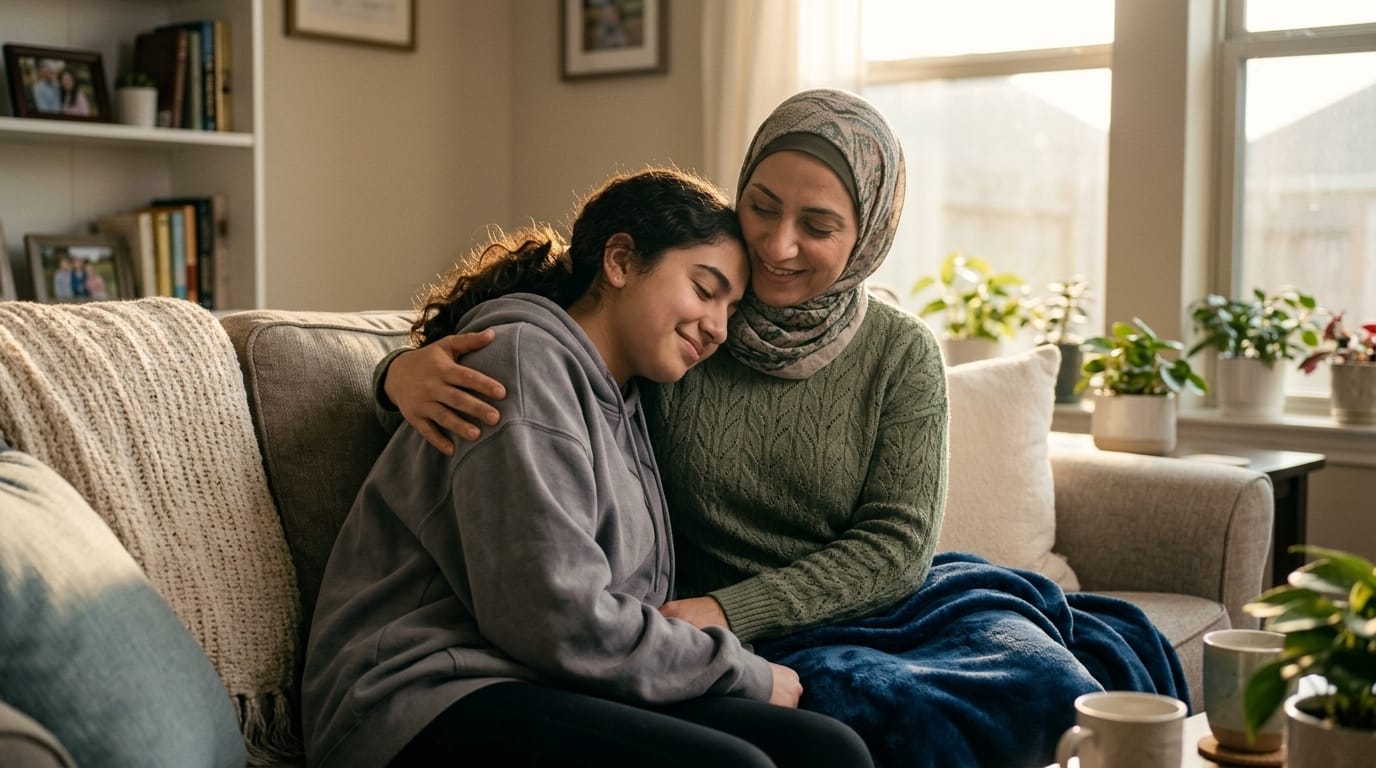
The teenage years are full of beautiful transitions, but they can also be incredibly challenging as a young woman’s body changes. If your teenage daughter is struggling with highly irregular periods, stubborn acne, or sudden weight gain, it can cause her a great deal of emotional distress.
As a mother or father, you might feel worried about her health and her future. At our clinic, Dr. Marlin and our team frequently help young women navigate a very common hormonal condition called Polycystic Ovary Syndrome (PCOS). We are here to provide a safe, compassionate space to balance her hormones, protect her self-esteem, and reassure you both about her future.
What is PCOS?
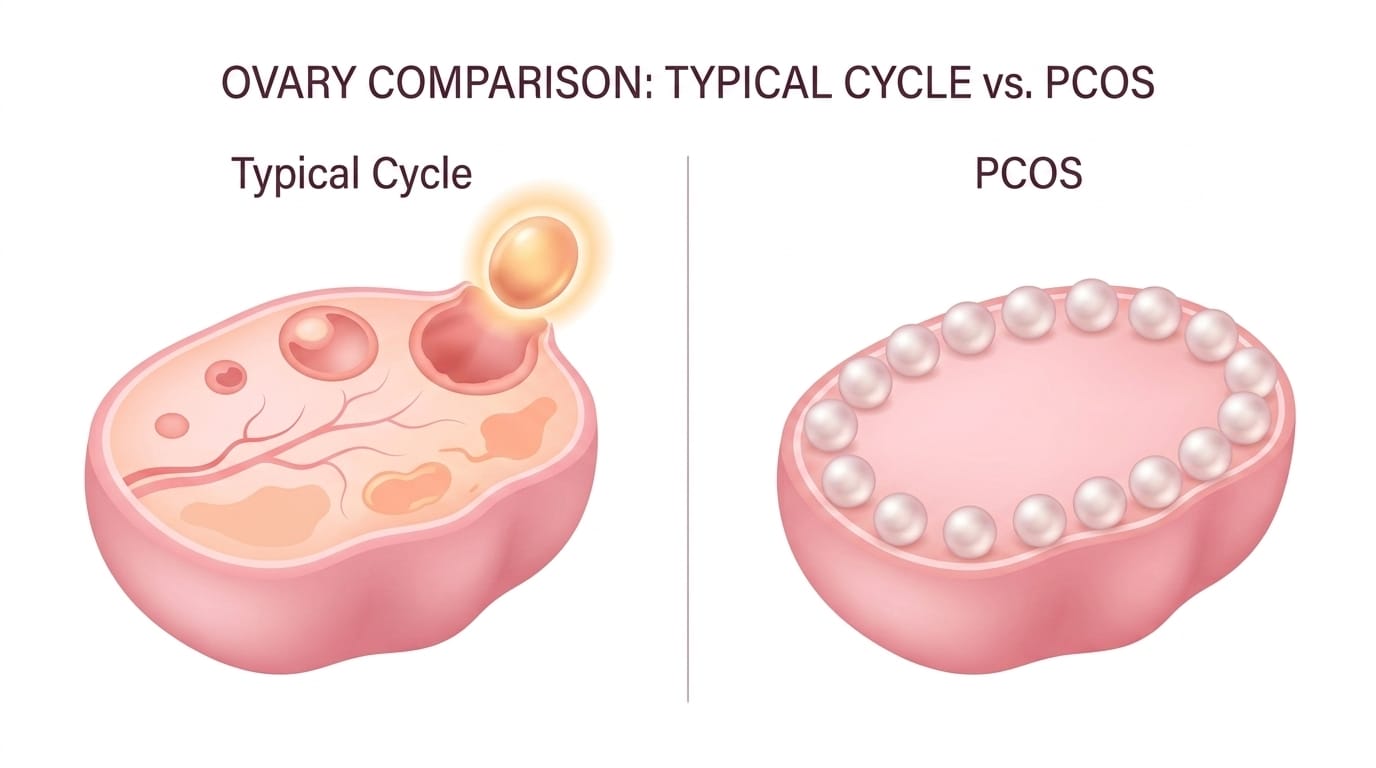
First, let’s clear up a common misunderstanding: the name "Polycystic Ovary Syndrome" is a bit confusing. It makes it sound like your daughter has dangerous cysts on her ovaries.
In reality, PCOS is simply a hormonal imbalance. Every month, a healthy ovary develops a tiny follicle (a small sac of fluid) that releases an egg. In PCOS, the hormones are slightly out of balance. The egg doesn't always fully develop or release, so those tiny follicles just stay on the ovary. They are completely harmless, but they disrupt the normal menstrual cycle.
The Root Cause: The Insulin Connection
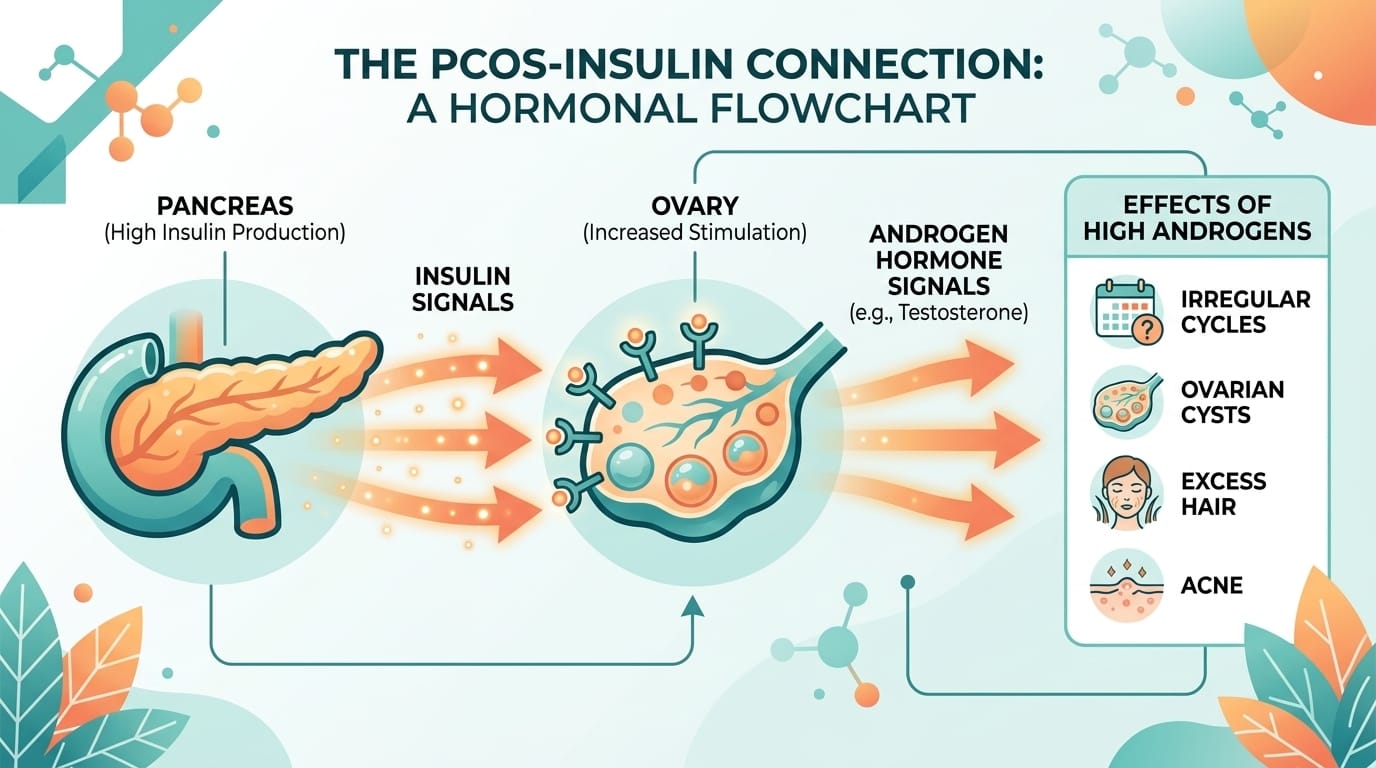
Why do the hormones get off balance? In the vast majority of cases we see here in the Middle East, it is deeply tied to insulin resistance.
If your daughter’s body has to produce extra insulin to process the food she eats (often a genetic trait passed down through families), that high level of insulin sends a confusing signal to her ovaries. It tells the ovaries to produce extra "male" hormones called androgens (like testosterone).
While all women naturally have some testosterone, having too much of it is what causes the frustrating symptoms of PCOS.
Spotting the Signs of PCOS
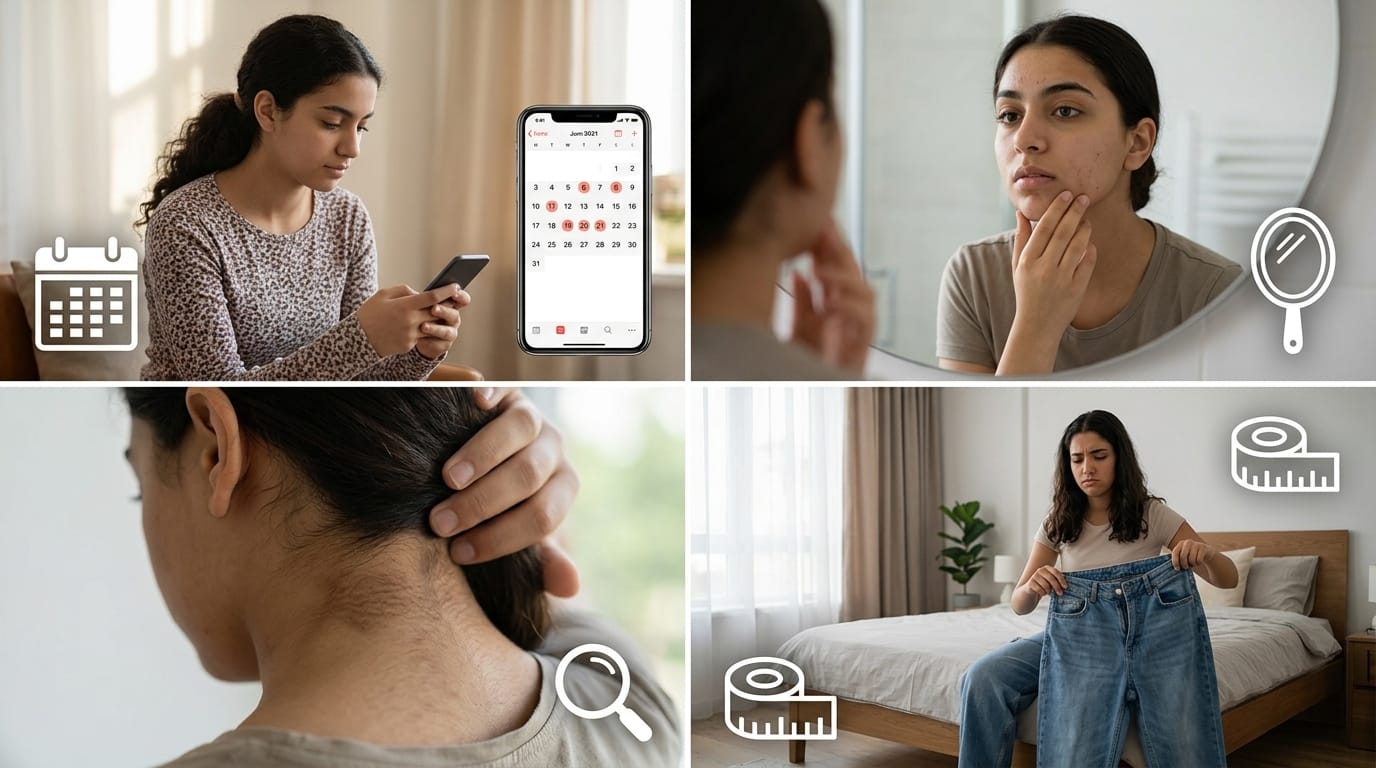
Because a teenager's cycle is naturally a bit irregular for the first year or two, PCOS can sometimes hide. We look for a combination of these signs:
Irregular or Missing Periods: Going months without a period, or having very heavy, unpredictable cycles.
Skin Changes: Severe acne that doesn't respond to normal face washes, particularly along the jawline.
Unwanted Hair Growth (Hirsutism): Dark, coarse hair appearing on the face (chin or upper lip), chest, or stomach.
Darkened Skin (Acanthosis Nigricans): Velvety, dark patches of skin on the back of the neck or under the arms (a key sign of insulin resistance).
Weight Struggles: Finding it incredibly difficult to lose weight, or carrying extra weight primarily around the belly.
How We Find Answers and Bring Balance
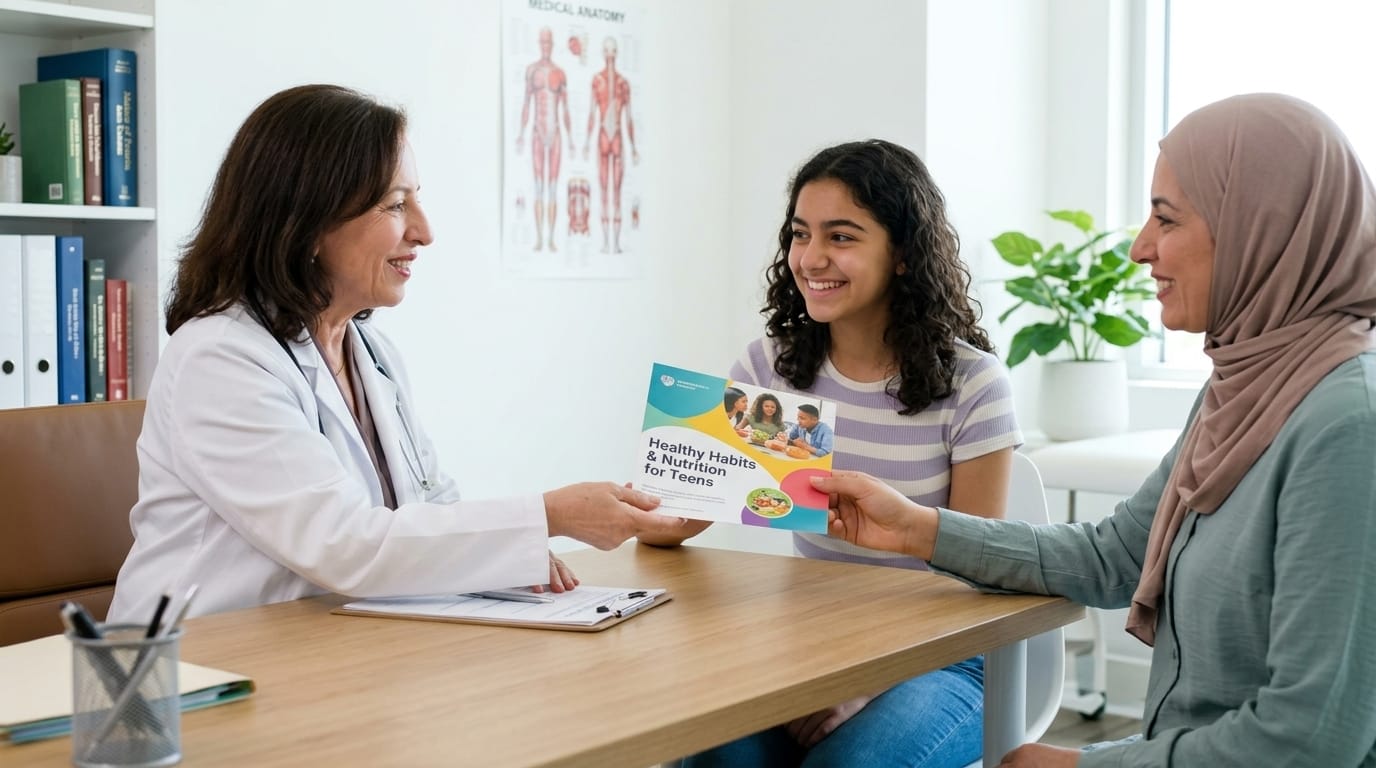
If we suspect PCOS, we will sit down with you and your daughter to discuss her symptoms in a gentle, private setting. We may run a simple blood test to check her hormone and insulin levels, and occasionally, we may request a gentle, non-invasive ultrasound of her abdomen.
Our Treatment Approach: PCOS is highly manageable. Our goal is to balance her hormones so she feels confident and healthy in her own skin:
Lifestyle as Medicine: We will work with your daughter on gentle nutritional adjustments to manage insulin spikes, without ever putting her on a restrictive "diet."
Insulin Support: We often use a safe, trusted medication called Metformin to help her body process insulin properly, which can naturally lower testosterone levels.
Hormonal Regulators: To protect her uterus and clear up acne or hair growth, we may prescribe medication to regulate her cycle and balance the excess androgens. (Note: We use these strictly as medical hormone balancers to bring relief and regularity).
A Note from Dr. Marlin Nino
When a teenage girl is diagnosed with PCOS, the very first question she or her mother usually asks is: 'Does this mean she won't be able to have children one day?'
Please let me reassure you: PCOS does not mean infertility. It is simply a temporary pause in ovulation that we can easily manage. When the time comes for her to start her own family in the future, her body will be ready, and there are wonderful, simple medical tools to help if she ever needs them. Right now, our focus is entirely on helping your daughter feel vibrant, confident, and comfortable in her changing body. We are here to support her every step of the way.