Understanding Genetics & Chromosomal Conditions:
A Guide for Parents

Learning that your child’s health condition may be linked to their genetics can feel intimidating. Words like "chromosomes," "mutations," or "syndromes" can sound scary, and it is completely natural for parents to feel anxious or even wonder if they did something wrong.
Please hear this first: Genetic conditions are nobody’s fault. They are simply a part of how your child’s unique physical blueprint was formed. At our clinic, Dr. Marlin Nino and our team are here to demystify these conditions. We want to help you understand your child’s blueprint so we can provide the precise, targeted care they need to live a beautiful, fulfilling life.
Genetics 101: The Body’s Instruction Manual
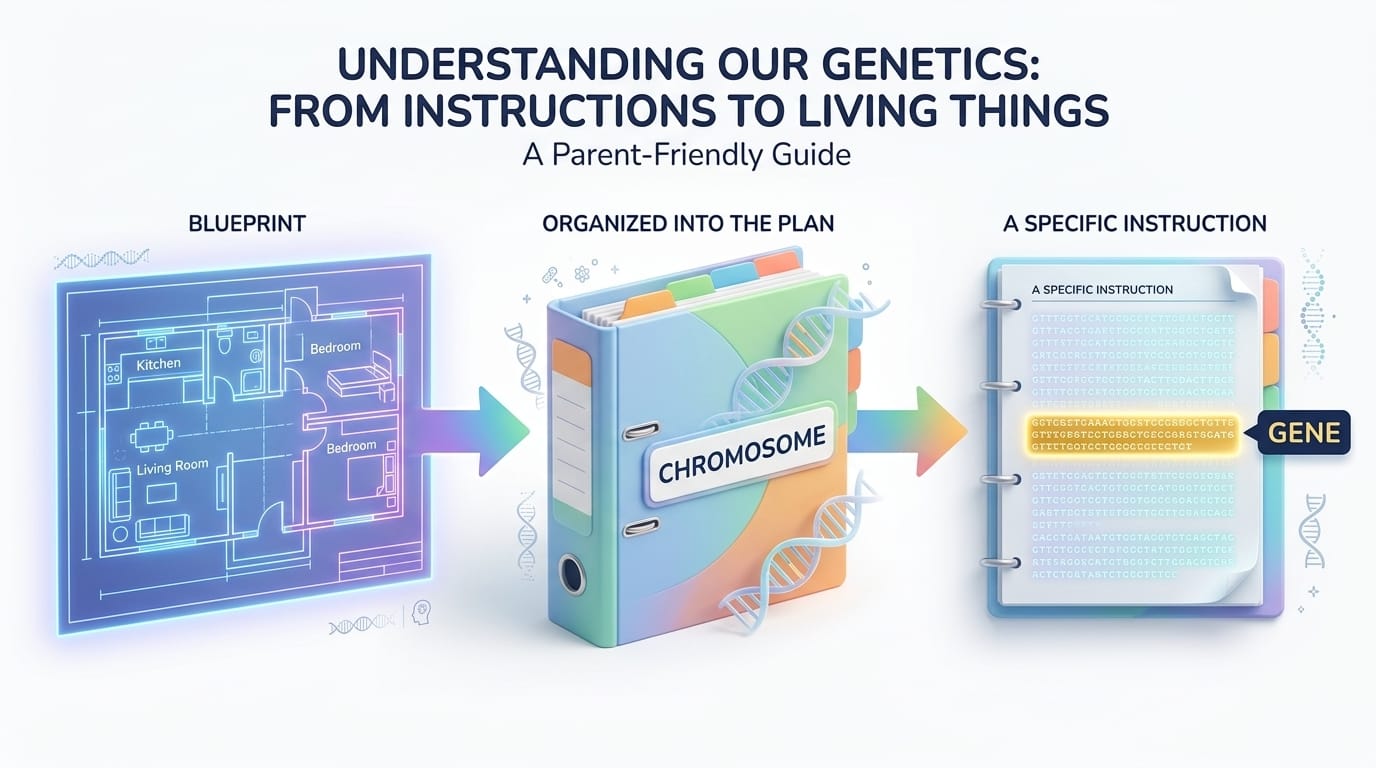
To understand genetic conditions, it helps to think of your child’s body as a complex, beautifully built house.
The DNA is the blueprint or the instruction manual that tells the body how to build and operate itself.
The Genes are the individual sentences in that manual (for example, one sentence determines eye color, while another controls growth).
The Chromosomes are the binders that hold these instruction manuals. Normally, every cell in the body has 46 chromosomes, arranged in 23 pairs (half from the mother, half from the father).
Sometimes, a child is born with an extra page in the manual, a missing binder, or a slightly misspelled sentence. When this affects the endocrine system (the glands that make hormones), it can impact how a child grows, how they process energy, or how they go through puberty.
Common Genetic Conditions We Care For
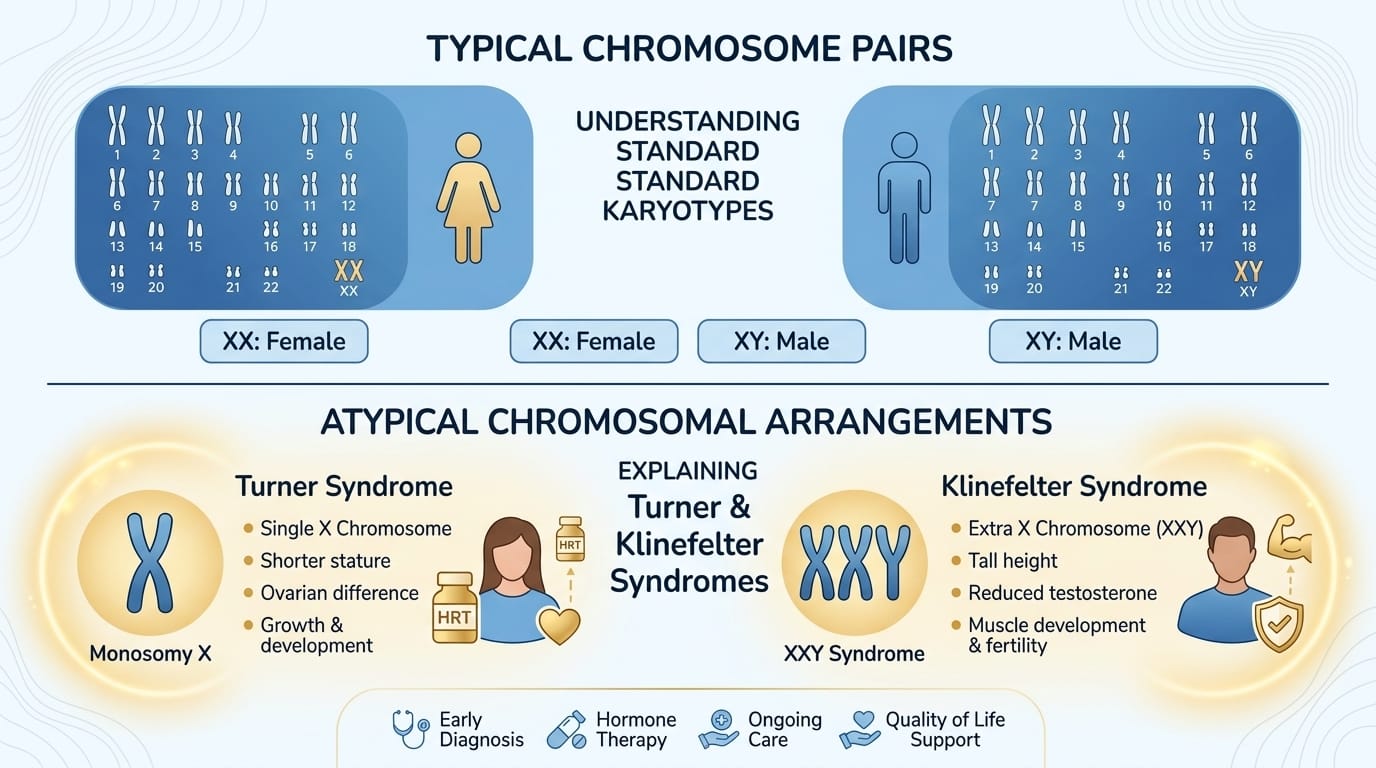
In pediatric endocrinology, we frequently support children with the following chromosomal and genetic conditions:
1. Turner Syndrome (Affects Girls)
What it is: Girls are typically born with two "X" chromosomes. In Turner Syndrome, one of these X chromosomes is completely or partially missing.
The Signs: The most common signs are shorter-than-average height and ovaries that do not produce enough hormones, which leads to delayed or absent puberty.
How we help: While we cannot replace the missing chromosome, we can expertly replace the hormones! We use growth hormone therapy to help your daughter reach a normal adult height, and estrogen therapy to ensure she goes through puberty right alongside her friends.
2. Klinefelter Syndrome (Affects Boys)
What it is: Boys are typically born with one "X" and one "Y" chromosome. In Klinefelter Syndrome, a boy is born with an extra X chromosome (XXY).
The Signs: Boys with this condition often grow taller than average but may have smaller testicles that do not produce enough testosterone. This can lead to delayed puberty, less muscle mass, and sometimes learning delays.
How we help: Testosterone replacement therapy works wonders here. It helps boys develop muscle, deepen their voice, and gain the confidence of normal teenage development.
3. Congenital Adrenal Hyperplasia / CAH (Affects Both)
What it is: This is a genetic condition affecting the adrenal glands (small glands sitting on top of the kidneys). The glands lack an enzyme needed to make a vital stress hormone called cortisol. To compensate, the body overproduces male hormones (androgens).
The Signs: In newborn girls, it can cause the outer genitals to look unusual. In both boys and girls, it can cause very early puberty and rapid growth that stops too soon, resulting in a short adult height.
How we help: We provide daily, life-saving medication to replace the missing cortisol and calm down the excess hormones, allowing your child to grow and develop normally.
4. Prader-Willi Syndrome (Affects Both)
What it is: A genetic condition affecting a specific part of chromosome 15.
The Signs: Infants may have weak muscle tone and struggle to feed. However, as they grow into toddlers, they develop an intense, uncontrollable feeling of constant hunger, alongside growth hormone deficiency.
How we help: We use growth hormone therapy to improve muscle strength and height, and we work closely with your family to create a highly structured nutritional environment.
Genetics & Family in the Middle East
Here in Jordan, certain recessive genetic conditions appear more frequently here than in other parts of the world. Understanding your family tree helps us diagnose conditions faster and even offer early screening for younger siblings, ensuring every child gets the proactive care they deserve.
How We Find the Answers
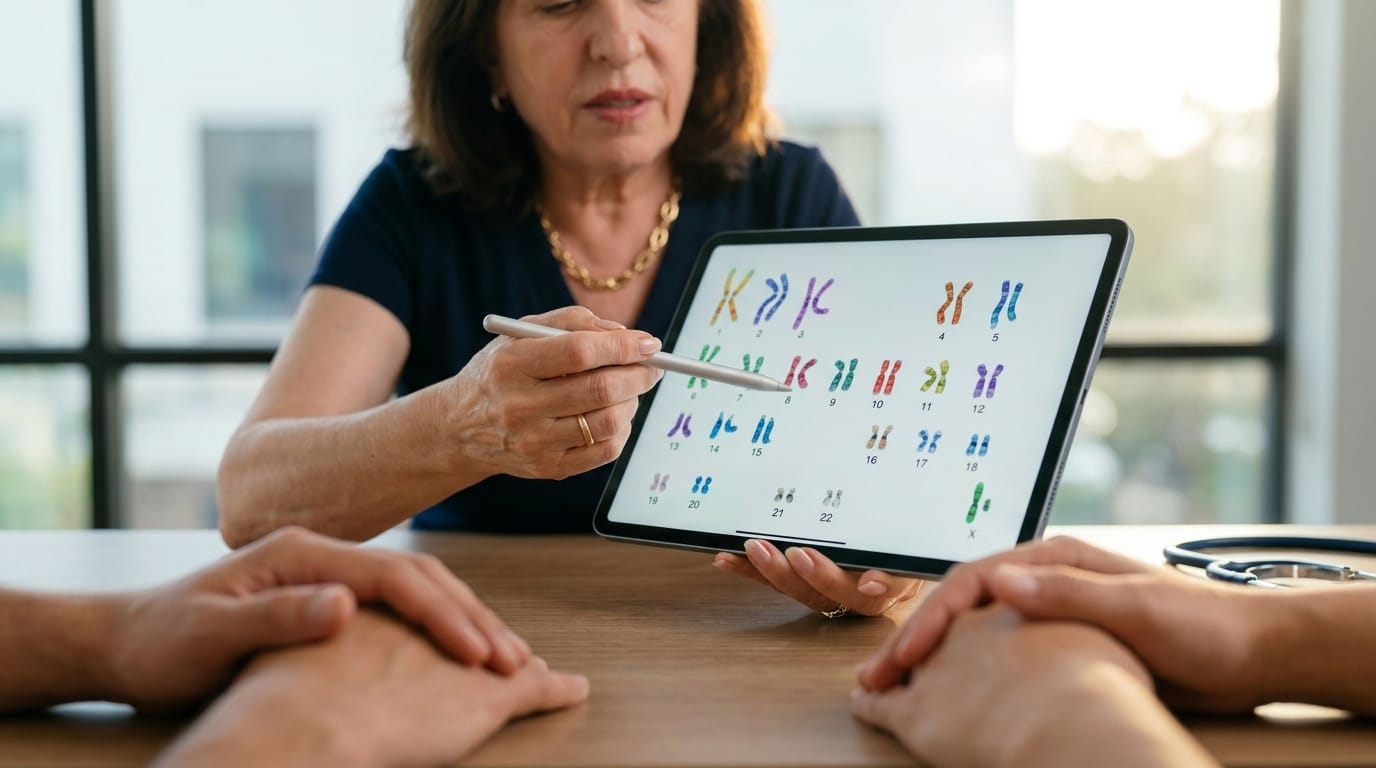
If we suspect a genetic or chromosomal link to your child’s growth or development, the testing process is very gentle. It usually involves a simple, standard blood test.
A Karyotype Test: Takes a picture of the chromosomes to count them and look for large missing or extra pieces.
Genetic Panels: Looks closely at the specific "sentences" in the DNA to find smaller changes.
A Note from Dr. Marlin Nino
Receiving a genetic diagnosis for your child can feel like the world is shifting beneath your feet. It is normal to grieve the 'perfect health' you imagined for your baby. But I want to encourage you: knowledge is power.
A genetic diagnosis does not define who your child is, nor does it limit the joy, love, and success they will experience in life. It simply gives us the exact roadmap we need to support them. We cannot change your child’s DNA, but through modern endocrinology, we have incredible tools to balance their hormones, guide their growth, and help them shine. Our clinic family is here to walk this path with your family, every single step of the way.