
Understanding Early (Precocious) Puberty:
A Guide for Parents

As parents, we know that children grow up in the blink of an eye. But sometimes, a child’s body begins to mature into an adult body much earlier than expected. This is a condition known as precocious puberty.
Generally, puberty is expected to begin after age 8 for girls and after age 9 for boys. When these physical changes, like rapid bone and muscle growth, or changes in body shape, happen before these ages, it can be confusing and overwhelming for both you and your child.
At our clinic, Dr. Marlin and our pediatric team are here to help you understand what is happening, why it’s happening, and how we can support your child’s health and happiness.
Spotting the Signs: What to Look For
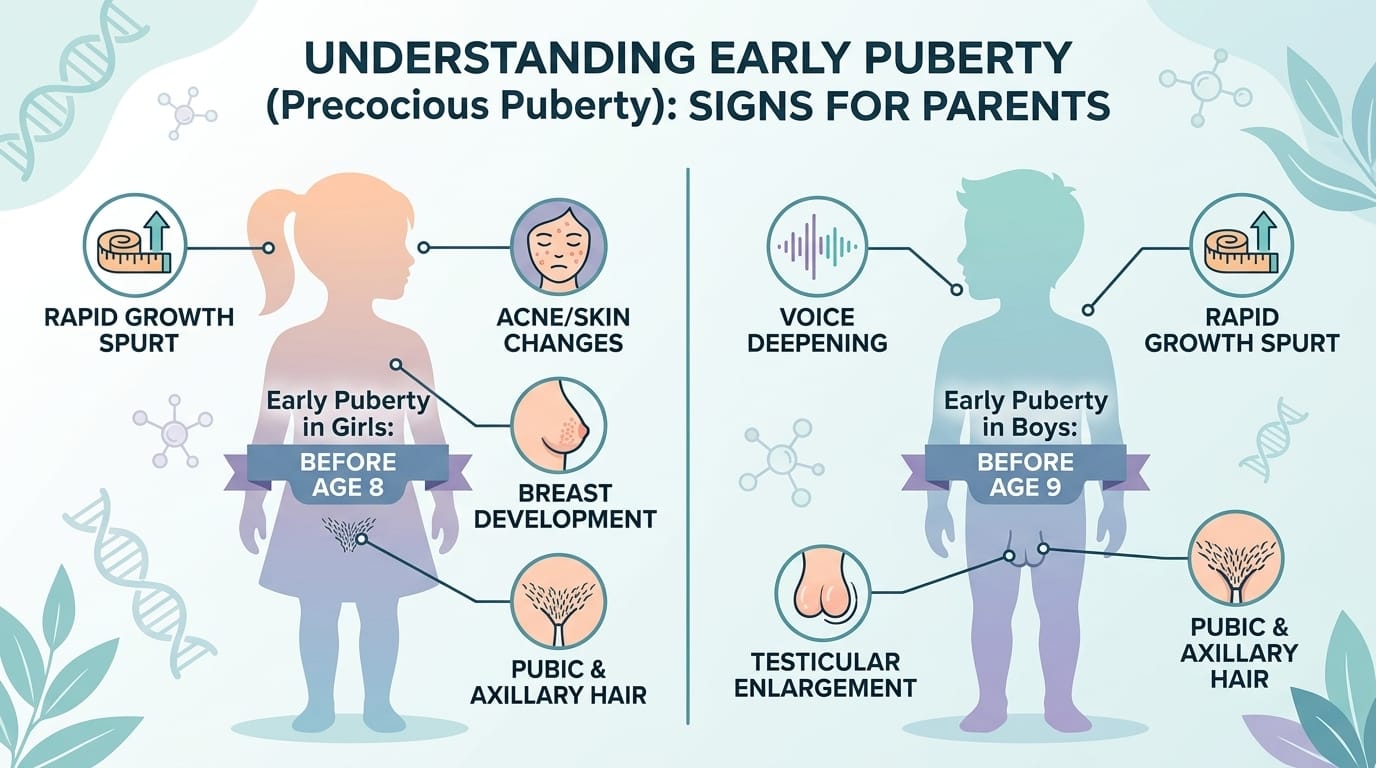
The signs of early puberty are the same as normal puberty, they are simply happening ahead of schedule.
Symptoms you might notice include:
In Girls (Before age 8):
Breast development.
First menstrual period.
In Boys (Before age 9):
Enlargement of the testicles and penis.
Facial hair growth and a deepening voice.
In Both Boys and Girls:
Growth of pubic or underarm hair.
A sudden, rapid growth spurt in height.
The appearance of acne.
The start of adult-like body odor.
If you notice any of these signs in your young child, it is a good idea to schedule an evaluation with us. You know your child best, and we are here to listen to your concerns.
Why Does This Happen? Understanding the Causes
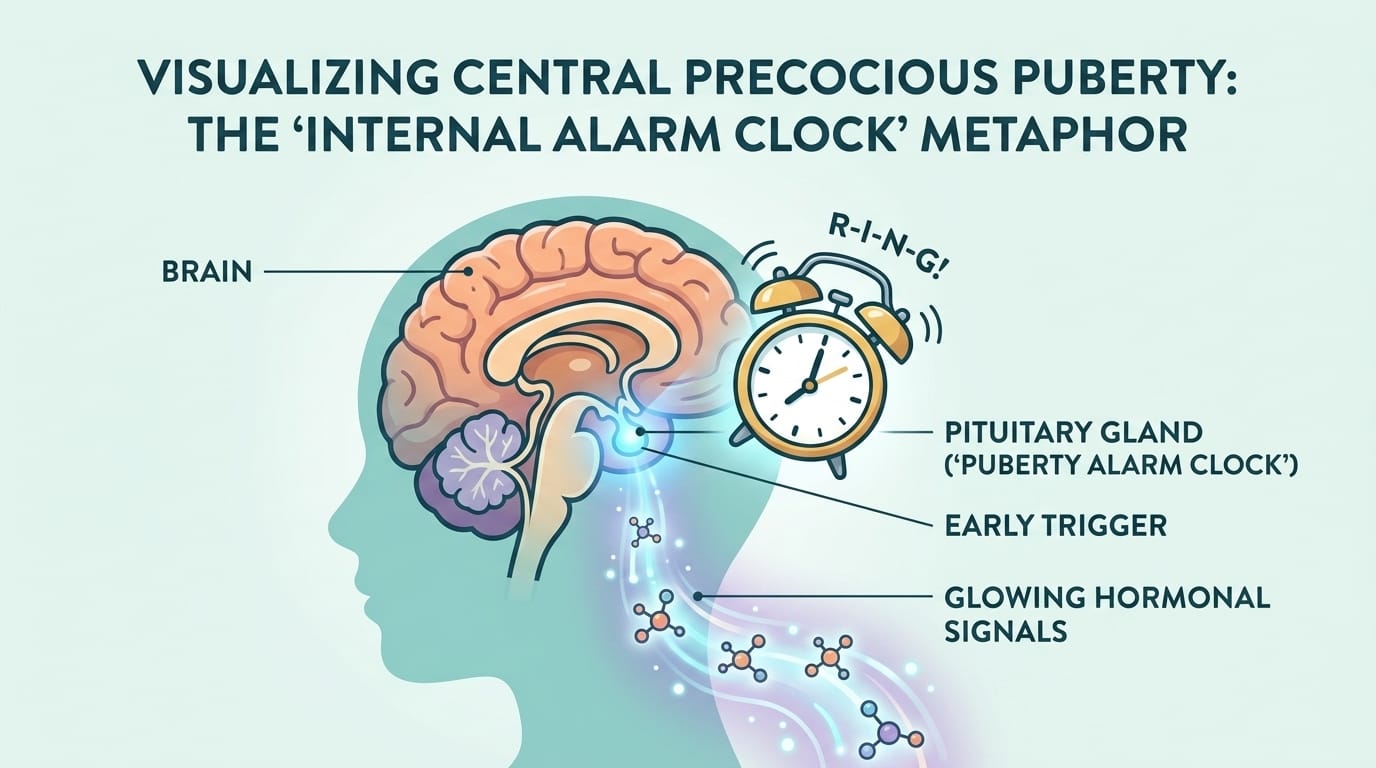
To understand early puberty, it helps to know how normal puberty works. It all starts in the brain, which sends a "starter hormone" down to the pituitary gland. This gland then signals the body to make estrogen (in girls) or testosterone (in boys), which causes the body to change.
When this process happens too early, it usually falls into one of two categories:
1. Central Precocious Puberty (The Brain's Alarm Rings Early) This is the most common type. The puberty process happens exactly as it should, just too soon. For the vast majority of children with this condition, there is no underlying medical problem—the body's internal clock just went off a bit early.
In very rare cases, it can be triggered by:
A harmless growth or fluid buildup in the brain present since birth.
Previous injuries, radiation, or tumors in the brain or spinal cord.
Certain genetic variations.
2. Peripheral Precocious Puberty (Hormones Activating Locally) This type is much less common. Here, the brain hasn't sounded the alarm yet, but the child’s body is still releasing estrogen or testosterone. This can be due to an issue with the ovaries, testicles, adrenal glands, or thyroid. Causes can include:
Severe hypothyroidism (an underactive thyroid).
Ovarian cysts in girls.
Certain rare genetic conditions.
Accidental exposure: Sometimes, children are accidentally exposed to hormone creams or ointments (like testosterone gels) used by adults in the home.
Who is Most at Risk?
While any child can experience early puberty, it is noticeably more common in girls than in boys. Additionally, carrying extra body weight (obesity) can significantly increase a child's risk of developing early puberty, as fat cells can influence hormone levels.
Why Early Care Matters
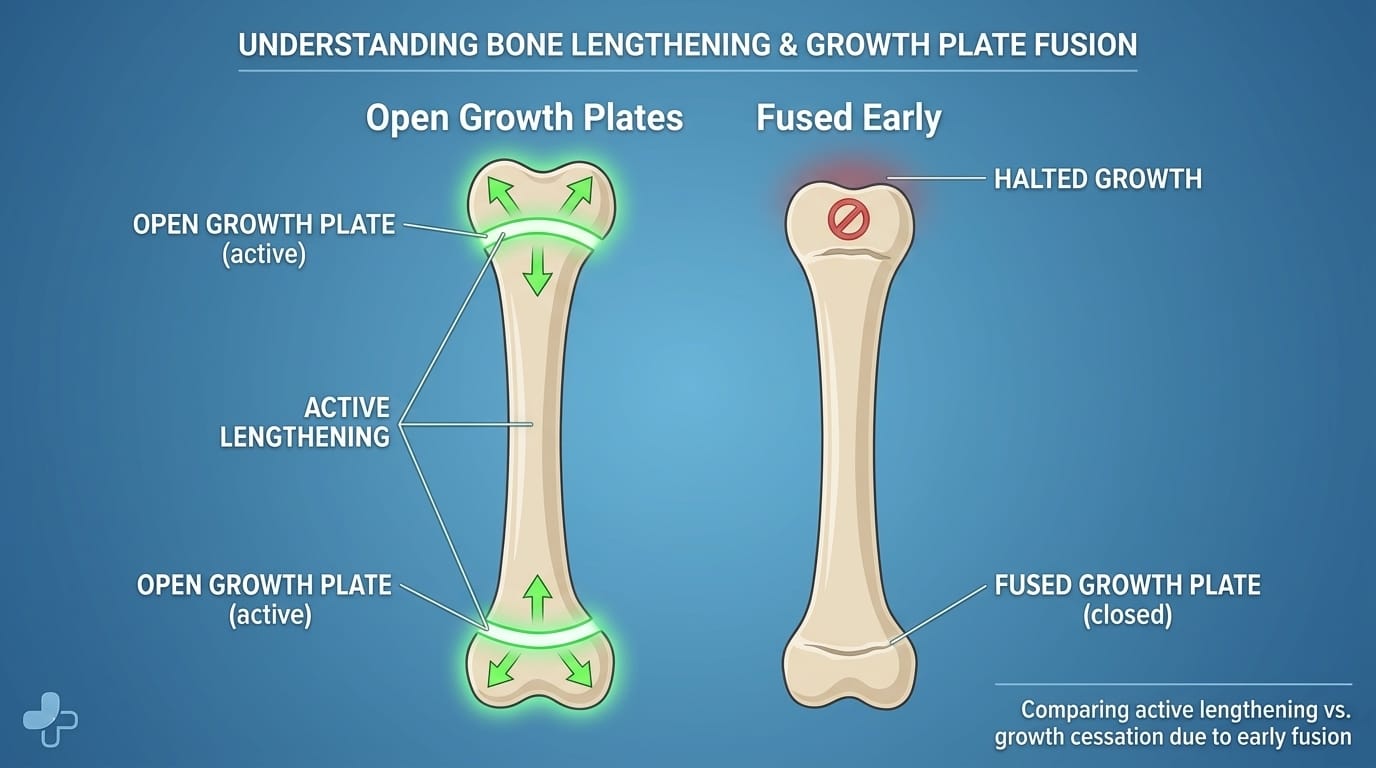
If left untreated, early puberty can lead to two main challenges that we want to help your child avoid:
Shorter Adult Height: Children going through early puberty often have a rapid growth spurt and might be the tallest in their class. However, the hormones cause their growing bones to mature and fuse too early. Once the bones fuse, growth stops, which can lead to a shorter-than-average height as an adult.
Emotional and Social Stress: Children want to fit in. Developing early can make a child feel painfully self-conscious, especially if they look much older than their peers but still think and play like a young child. This mismatch can cause emotional distress, withdrawal, or low self-esteem.
Prevention and Healthy Habits

While you cannot control genetics or gender, there are proactive steps you can take at home to support your child's hormonal health:
Maintain a Healthy Weight: Encourage a balanced diet and plenty of active play.
Mind the Medicines: If anyone in your household uses prescription creams, gels, or dietary supplements containing estrogen or testosterone, make sure they are stored safely out of your child's reach, and wash your hands thoroughly after applying them.
A Note from Dr. Marlin Nino
Here in Jordan, we cherish our children and want to protect their childhoods for as long as possible. If your child is showing signs of maturing earlier than their peers, it is completely natural to feel worried, both for their physical growth and their emotional well-being.
Please know that early puberty is highly treatable. With safe, effective medications, we can gently 'pause' the puberty process, allowing your child's bones to grow at a normal rate and giving them the time they need to just be a kid. Our clinic is a safe, confidential space for your family, and we are here to support you with expert care and compassion.